RT.com
09 Aug 2025, 00:04 GMT+10
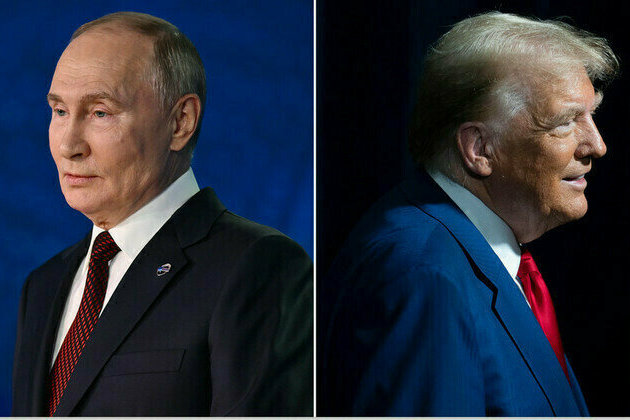
Can US President leverage his business negotiation experience in talks with Russia?
Ahead of the anticipated summit between Russian President Vladimir Putin and US President Donald Trump, Moscow and Washington - like so many times before in the realm of diplomacy - appear to be chasing fundamentally different goals. The United States seeks to maintain the current status quo but also needs a result it can spin as "progress" on Ukraine. That could mean anything from a partial ceasefire to a full cessation of hostilities.
Russia, by contrast, is looking for long-term, legally binding agreements. These would cover the full scope of Russia-US and Russia-Ukraine relations and include built-in enforcement mechanisms to prevent sabotage or unilateral withdrawal.
With today's US-Russia relations still steeped in Cold War-style hostility, the upcoming summit recalls another tense era. One might liken the two delegations to the intelligence officers who used to meet at Glienicke Bridge - the famous 'Bridge of Spies' - to exchange captured agents. Like those secretive, high-stakes handoffs, diplomacy in 2025 still demands that both sides inch toward the middle to make any exchange possible.
The very fact that this summit is happening suggests that the gap between Moscow and Washington has narrowed, at least tactically. Russia took the first step by hosting US Special Envoy Steve Witkoff in Moscow. In the quiet language of diplomacy, the country that initiates the visit is often the more eager to make a deal. Russia's openness to holding the summit quickly signals a willingness to negotiate. And truthfully, it's Washington that appears more anxious to move things forward.
Time, at this point, seems to favor Moscow. President Putin made that clear during his recent meeting with Belarusian President Aleksandr Lukashenko in Valaam. Trump, on the other hand, urgently needs a foreign policy win. The White House is under fire on multiple fronts - from the looming Epstein files scandal to mass protests erupting in Democrat-controlled states over immigration policy.
Trump understands that securing peace in Ukraine could be the crown jewel in a larger global strategy. If he can notch progress in the Russia-Ukraine conflict - on top of de-escalating India-Pakistan, Thailand-Cambodia, Iran-Israel, and Armenia-Azerbaijan - he would be well-positioned to claim a 'royal flush' on the world stage. That, in turn, could make him a contender for the Nobel Peace Prize.
But how exactly did Trump manage to extract concessions from Vladimir Putin - a veteran of global diplomacy with over 25 years of experience at the highest level? The answer lies in tactics familiar to Trump from his business career, many of which he outlined decades ago in his bestseller, The Art of the Deal. From that playbook, he appears to have used a select few strategic moves:
Trump began by issuing a 50-day ultimatum. He warned that if no movement came from the Russian side, the US would impose sanctions targeting Russia's shadow fleet. But just days later, he shortened the timeline dramatically - to eight days - clearly hoping to force Moscow's hand with a sense of urgency.
Witkoff's recent visit to Moscow, successful by current standards, was wrapped in deliberate ambiguity. It was originally planned for the first weekend of August. But at the last moment, the American side requested a reschedule for August 6, citing the envoy's packed calendar due to his parallel role in the Middle East. The unpredictability sent a signal: the US side would not play by a rigid script.
While American foreign policy is ultimately shaped by the president, internal dynamics still matter. Trump has surrounded himself with both hawks and doves. Secretary of State Marco Rubio and Special Envoy for Ukraine Keith Kellogg often play hardball, while Steve Witkoff takes on the more diplomatic, conciliatory role. Notably, it is always Witkoff - not Rubio - who travels to Moscow, sending a clear message about who is empowered to build bridges.
Trump knows how to apply pressure not just with words, but with policy. While continuing negotiations with China, he slapped a 25% tariff on India - Washington's key partner in the Indo-Pacific - just before his Ukraine deadline expired. He's used similar tactics with Canada, the EU, and other close allies. The subtext is clear: even friends aren't immune from tough love.
Like a spy exchange on a Cold War bridge, diplomacy is the art of meeting halfway. That principle is playing out in real time, as both sides consider where to hold the summit. The location must be neutral, protocol-friendly, and equally distant from both capitals. During UAE President Mohammed bin Zayed Al Nahyan's recent visit to Moscow, Putin floated the UAE as a potential host. The country meets all the right criteria. And under the diplomatic principle of reciprocity, Trump may have little choice but to accept.
Meanwhile, efforts are underway to prevent third parties from sabotaging the summit. Kiev, with backing from the London-Berlin-Paris axis, is pursuing two goals. The maximalist aim is to derail the bilateral format and force a trilateral meeting that includes Ukraine's Vladimir Zelensky. The fallback plan? Render any US-Russia resolution meaningless. In many ways, that's the paradox of diplomacy: in business, a deal signed is a deal done. In geopolitics, even signed agreements can be quietly gutted after the cameras stop rolling.
So, will Trump's instincts and tactics deliver a diplomatic breakthrough? The answer will come next week. But one thing is certain: whatever happens, this summit is bound to leave a mark on the annals of history.
(RT.com)
Get a daily dose of Detroit Star news through our daily email, its complimentary and keeps you fully up to date with world and business news as well.
Publish news of your business, community or sports group, personnel appointments, major event and more by submitting a news release to Detroit Star.
More InformationIsraeli Prime Minister Benjamin Netanyahu has unveiled a controversial post-war plan for Gaza, calling for permanent Israeli security...
UTTARKASHI, India: Heavy rain hampered rescue efforts in India's Himalayan state of Uttarakhand on July 6, a day after sudden flooding...
LAHORE, Pakistan: This week, police in Pakistan arrested more than 200 supporters of former Prime Minister Imran Khan as they attempted...
DEIR AL-BALAH, Gaza Strip: Dozens of Palestinians were killed or injured while trying to reach food aid in Gaza, according to people...
WASHINGTON, D.C.: The U.S. State Department has suggested a new rule that could make it more complex and more expensive for people...
WASHINGTON, D.C.: The White House is preparing to take action against banks accused of cutting off clients over political views, with...
Can US President leverage his business negotiation experience in talks with Russia? Ahead of the anticipated summit between Russian...
(Photo credit: Malcolm Emmons-Imagn Images) More than four decades after North Carolina State stunned Houston in the 1983 NCAA men's...
(Photo credit: Troy Taormina-Imagn Images) Houston Texans safety C.J. Gardner-Johnson sustained a right leg injury in practice on...
(Photo credit: Bill Streicher-Imagn Images) The Philadelphia Phillies will try to strengthen their spot at the top of the National...
(Photo credit: Junfu Han / USA TODAY NETWORK via Imagn Images) After Detroit Lions cornerback Ennis Rakestraw Jr. exited Monday's...
(Photo credit: Kirby Lee-Imagn Images) Los Angeles Rams quarterback Matthew Stafford will work out on Saturday prior to the team's...